
Your Guide to Nutritional Awesomeness

Ooooooh boy, it has been A WHILE since my last blog post. My bad!
The reason, as you could probably guess, is that I've been busy with clients even though we're in the midst of vacation season (which is always a good thing). Also, I'm known as the "nutrition guy" where I work, and was recently asked to revamp the nutrition tips that we hand out to clients. While most of my free time this week was devoted to that, I decided that I should also post them to this blog. After all, if you're one of the lucky ones who's reading my blog, there's no reason why you shouldn't be able to view this list of nutritional awesomeness.
 The literal meaning of "stuffing my face."
I do want to mention that my girlfriend, Lindsay, helped me compile this list as well (have I mentioned she already has a masters in nutrition communications....and is now getting her doctorate?) And so without any further ado, here are our 6 tips, and I hope they help!
Learn to Cook.
You’re busy, you’re tired, but that’s when healthy decisionsare the most important. When you cookyour own food, you’re taking control over what you’re eating. Aim for meals composed of whole ingredients,and find recipes that match your skill level and time commitment. If you love to cook and have the time, trysomething more involved, but there are plenty of healthful dishes that can betossed together in a matter of minutes.
By choosing your own ingredients, you can favor nutrient-densefoods and avoid the sugars, harmful fats, and additives found inhighly-processed foods. Living ahealthier life means taking autonomy over what you’re putting in your body!
Hit the grocery store (at least) once a week.
The biggest barrier to improving one’s nutrition is oftenhaving healthier food in the house. By shopping once a week, you’ll be able tostock up on foods that have actually have a shelf-life of less than 2 weeks,and not those edible, food-like substances.
When you’re in the store, shop mostly on the perimeter whereyou’ll find plenty of fruits, vegetables, meats, and fish. Once you venture to the inner aisles, nutbutters, olive oil, quinoa, brown rice, beans, and oatmeal aren’t too hard tofind. If you can’t find something fresh,feel free to get its frozen version, as most of these items are frozen at thepeak of freshness.
Stop Counting Calories
We’re always told that what determines weight loss iscalories in/calories out. Yet, estimatesof how many calories we need could be off by as much as 25%, and the caloricestimates of foods can be off by another 25%. Talk about a headache!
When you vigilantly count calories, you’re not seeing theforest through the trees. Energy balanceis important, but honing in on calories means you’re not focusing on the biggerpicture – what is this food doing for me? Is it providing vitamins and minerals? Is it processed and does it contain unnatural additives? Does it contain heart healthy fats? Most importantly, do I enjoy eating it?
Foods perform many other tasks in our body than simplyproviding energy, and by eating a healthier diet with whole foods, caloricdeficits are usually taken care of as a side effect.
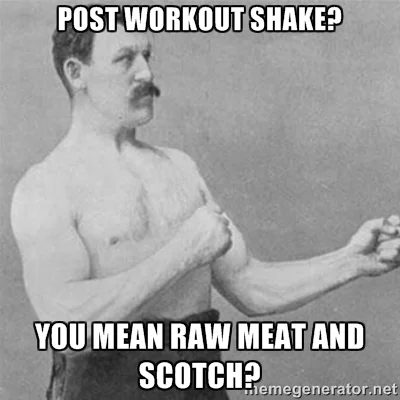 This type of post workout nutrition is also known as "diesel fuel."
Ensure your post workout nutrition meets your goals.
What is your goal? The two most common are either A) fat loss, or B) building mass/muscle.(Hint: you can only pick one!)
If your goal is fat loss, rethink whether you actually needyour post workout shake/bar, and what you’re consuming after a workout. Why? We all tend to underestimate the calories we’re consuming, andoverestimate the calories we’re burning. While you still shouldn’t be counting calories, the period after youworkout is not the time to go hog wild on junk.
Conversely, if your goal is to put on weight and/or buildmuscle, a post-workout shake or meal is one of the best ways to get there.
Plan ahead.
Pick a day every week to go shopping and prepare food forthe upcoming week. While this could meancooking a large meal and having leftovers for lunch, it can also entail cuttingup fruits and vegetables and putting them in containers for the workdays. This way, you’ll have more time during theday and can simply “grab and go” on your way to work.
Also, there’s something to be said about planning ahead foryour “moments of weakness.” If you findyourself eating ice cream late at night, or sneaking a few unhealthy foods whenyou get home from a long day, ensure that you have plenty of healthier optionsaround. It may be a bit more effort, butit will be well spent!
Good nutrition is sustainable for you and for the environment.
Diets, as we commonly know them, don’t work for areason. They often promote one nutrient anddemonize another (the current trend is protein over carbs, and a few years agoit was carbs over fat), and lack the sustainable approach needed to permanentlychange one’s eating and lifestyle habits. While current approaches like Paleo, Intermittent fasting, or WeightWatchers may work for some, there is no catch-all for everyone. Find an approach that works for you in thelong term while not feeling deprived.
Next, local and seasonal food is often found to be of higherquality than that shipped from overseas. Why? As soon as food isharvested, the nutrients begin to decline, and what makes food the mostnutritious is the soil in which it is grown. While asparagus from Brazilmay sound tempting in December, the less your food has to travel to reach yourplate, the better it is for you and for our environment.