
Curls Are (Not Only) For the Girls
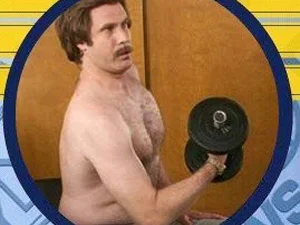
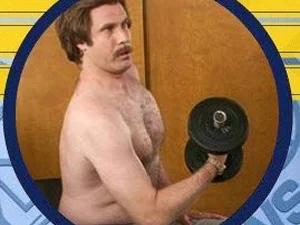
I’ve made it no secret that I favor large, multi-jointexercises like pullups, squats and deadlifts. In fact, if all you ever did in the gym was deadlift and some TurkishGet-ups, you’d be eating a whole, balanced diet.
However, blame it on the new year, how much I’ve learned the past few months, or even the size of my ownarms, but there’s one exercise I’ve recently added to my own workouts...
Themuch maligned, and “nonfunctional,” bicep curl.
Beforeyou start telling me that I’m a hypocrite (I wrote in one of my first posts that they’re useless for many people), and that I should set my hair on firefor even suggesting bicep curls to the general population, I want to say “Iknow.” Ok? I know I’m a walking contradiction…but whenyou think about it, isn’t everyone?
Sowhy exactly have I changed my mind on this “body builder” exercise? Well, I hope you have a few minutes, becauseI’m about to put on my nerd hat.

First,biceps curls can play a part in injury reduction. When people perform heavy deadlifts, think about all theforces and actions going on to ensure that one’s arms don’t rip clean off oftheir body. While the body does atremendous job keeping it safe, one of the potential injuries for seriousdeadlifters is a distended elbow (if you’re as squeamish as I, then yeah, itreally is as gross as it sounds).
Ifyou look at the biceps, one if its main functions is to flex the elbow andprovide stability as it inserts into the radial tuberosity (an important partof the elbow). If one were to distend orsublux their elbow, what’s actually occurring is that the head of the radius ispulled out from the anular ligament of the radius. Yup, gross.
Then,if we move up from the elbow, we see that the other end of the bicepsruns up the shoulder through the joint capsule, to the superior lip of theglenoid labrum. The other shoulder attachmentof the biceps runs all the way up the arm to what’s called the coracoidprocess, a fancy way to say that it’s also attached to your shoulderblade. Now, if you’re not bored with thescience talk, what we can take away is that the bicep contributes to both elbowand shoulder stability. A stronger bicepwould, in theory, help stabilize both the elbow and shoulder, allowing you totake over the world.
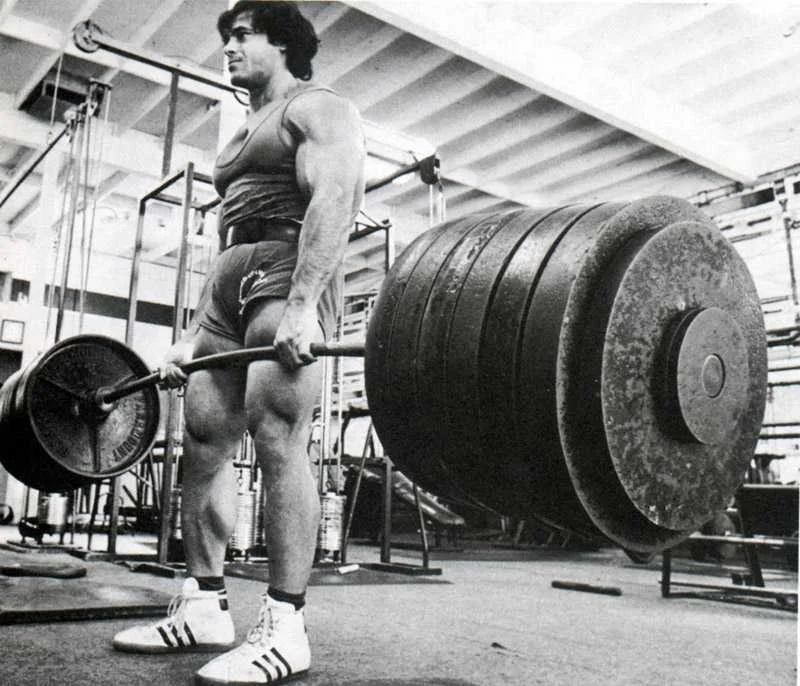 I'd classify this one as a "heavy deadlift.."
Now,if you’ll allow me to take off my nerd hat, we can also look at the otherimportant reason to incorporate some bicep curls – building massive pipes. I’m a realist, and it’s tough to build someserious “gym cred” if instead of having a set of pythons, you have a set ofGarter snakes coming out of your sleeves.
How and when would I place biceps curls in a normal routine? Contrary to what some bro-scientists wouldsay, I argue that the time and place for biceps curls is definitely not at thebeginning of the workout. And unless youcan deadlift 300 pounds and do 3 chin ups with 100 pounds attached to yourbody, time spent performing bicep curls would be better spent at gettingproficient at the aforementioned weights (for women, I’d move the markers todeadlifting your own body weight, and performing 2 solid chin ups). But, assuming you can perform the numbers Imentioned above, I'd throw in 2-3 sets of 8-12 reps at the very end of a workout, beginning with a relatively light weight.
As for me? I’ll be throwing in some bicep curls for the next few months…that is,until I change my mind again. Call me a hypocrite. I don't care.
Just realize that the more you learn, the more yourealize you just don’t know.