
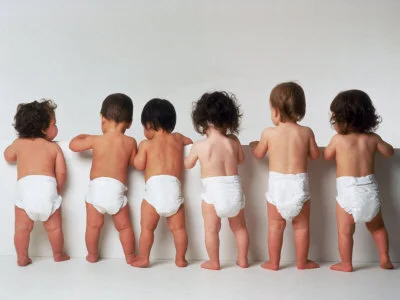
Enter my greatest fear: 6 dirty diapers.
This
past Christmas break, I spent a ton of time watching my niece and nephew. And besides reveling in their infinite
cuteness, trying to decipher their words, and avoiding diaper changes, I
learned a lot about how they move. I
know, it may sound odd, but there’s a heck of a lot we can learn from watching
toddlers play around.
Before
I move on, I urge you to keep an open mind.
Also, let’s collectively take a second to put down all the dumbbells,
kettlebells, and, for the love of all things holy, please swear to me that you’ll
never again touch a bosu ball.
First,
toddlers rarely have any type of mobility problems. In fact, you don’t often hear of children
ever complaining of “tight hamstrings,” shoulder restrictions, or lower back
pain….ok, maybe the whole “learning to speak” barrier keeps us
ignorant. But, what does
this mean? That we’re all born with what
we need, but it’s through our own fault that we develop any type of
restrictions.
Next,
and possibly the most important thing I learned, was how important crawling can
be for adults. Crawling, you say? Yes, crawling!
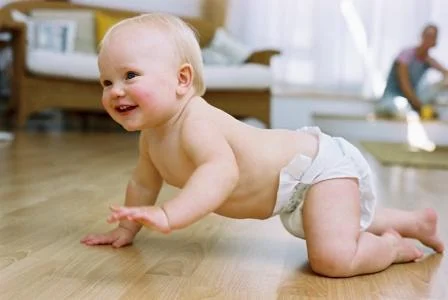
You may see a cute baby, but I see rotary stability!
So,
why IS crawling so important? Well, if
you look at your normal adult, they usually have some type of rigidity in their
upper body. Even if someone has
exceptional shoulder mobility (like myself), their upper spine is usually a bit
stiffer in certain parts than it should be.
Breathing patterns, working in an office, and just how we sit all play a
role in this department.
When
you break crawling down to its simplest form, you start to see why it’s so
beneficial. First, we work on building
shoulder stability. In fact, if you’re
down on your hands and knees, it’s probably pretty safe to say that you have
your shoulder in the “packed” position, and are working pretty much everything in
your upper body. Also, by having your
weight on your hands and knees, you’re already in the opposite position than
most people spend 99% of their day…and that’s a good thing!
Then,
when you start moving, you get a ton of other benefits. You begin to work on mobility in the shoulder
and thoracic spine of your free hand, while working on shoulder and trunk
stability on the arm that’s on the floor.
You’re also getting plenty of additional arm work, as your bicep and
tricep are pulling your scapula over your shoulder to achieve this
shoulder stability. All of this without
any equipment? Talk about bang for your buck!

Here’s the usual result when you ask someone to perform an advanced crawling progression.
All
of these patterns are in stark contrast to your traditional bench presses and
heavy barbell squats. While these
exercises definitely do have their place, it’s important to realize that we
need a balance, and overdoing it on these exercises (or not prescribing the
proper accessory movements) can really decrease your mobility.
Next,
crawling helps with neuromuscular sequencing.
In fact, whenever I teach crawling to a group of adults for the first
time, it usually results in a ton of laughter, and failures in body
coordination that rivals a newborn fawn.
But what’s the result? Everyone
gets better at sequencing their inner core, and any type of core work we
perform after this drill is usually markedly better.
It’s
fun to think about all the ways we move around when we’ve mastered the basics
of walking. We have all come so far, but
what we really need is to get back down to where we once were.

Alex Tankskey is the founder of The Movement Lab. A former marketer and Facebook surfer, Alex changed careers when he experienced how strength can transform your life. He's now a Strength Coach under the National Strength and Conditioning Association (NSCA), StrongFirst (SFG1), Functional Movement Systems (FMS), and a certified Precision Nutrition Coach (Pn1).